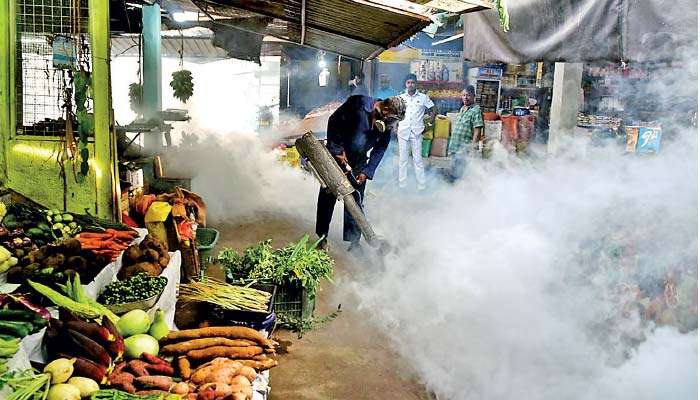
While Sri Lanka has achieved world-leading dengue treatment outcomes, the country continues to struggle with prevention as record infection numbers overwhelm hospitals. Experts point to failures in waste management, research implementation, and scientific governance as key obstacles.
Sri Lanka is experiencing dengue infections at record levels, with hospitals overflowing and patients being advised to manage symptoms at home—a situation reminiscent of the COVID-19 pandemic. The government has responded by appointing 1,500 Mosquito Eradication Health Service Assistants, yet this approach addresses symptoms rather than underlying causes. While Sri Lanka's medical system has achieved a near-zero case fatality rate for dengue treatment and operates the world's first Dengue Management Centre of Excellence, the nation continues to struggle with disease prevention.
The root issue, according to analysts, lies in community waste management practices exacerbated by climate instability. The Breteau index, which measures the density of Aedes mosquito larvae by counting positive water-holding containers per 100 houses, reveals mosquitoes are thriving in environments created by poor waste disposal. Despite a Prevention of Mosquito Breeding Act being in place, structured waste management remains fragmented, with local councils investing heavily without achieving results. The Meethotamulla dump disaster serves as a cautionary example whose lessons have reportedly been overlooked.
Sri Lanka has invested in scientific solutions including Bti bacteria technology and Wolbachia research. A local Bti production facility, developed through technology transfer from the Industrial Technology Institute to Bio Power Lanka Ltd. around 2009, eventually became defunct due to lukewarm market response. Similarly, Wolbachia research conducted in partnership with Monash University and the World Mosquito Program completed a successful pilot between 2017 and 2020 but did not scale nationally. The government recently announced plans to introduce Wolbachia in September, though implementation timelines remain unclear.
Experts attribute these failures to fragmented governance and disconnects between research outcomes and policy decisions. Comparisons to Singapore's national Project Wolbachia rollout and Google's Debug Project in California highlight how other regions have successfully integrated research into sustained biological control programs. Unless Sri Lanka reorganizes its scientific governance to align research with implementation, coordinate private-public partnerships, and address waste management systematically, dengue prevention will continue lagging despite strong clinical capabilities.









-850808_850x460.jpg)