
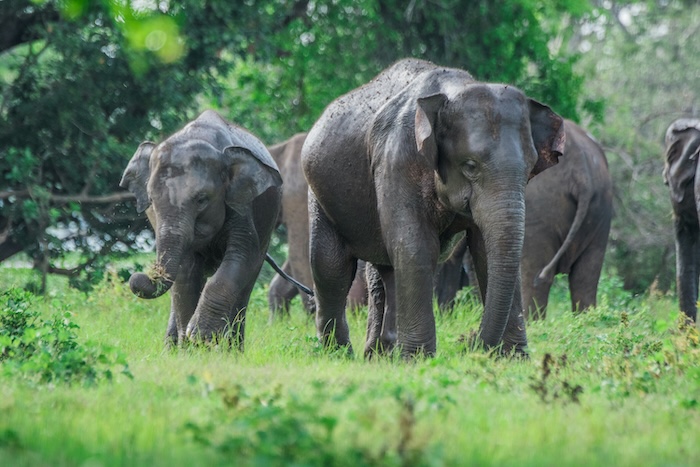
The Sri Lankan government has officially gazetted three major elephant corridors and unveiled a comprehensive strategy to reduce human-elephant conflict through habitat restoration, infrastructure improvements, and veterinary support.
On the occasion of World Elephant Day, the Ministry of Environment has announced a multi-faceted initiative to address human-elephant conflict through permanent and scientifically-backed solutions. Under the direction of President Anura Kumara Dissanayake, three elephant corridors—Watahira Kanda, Hadapanagala, and Koholankala—have been formally gazetted in Hambantota and Monaragala districts, with preliminary work beginning in Anuradhapura. The corridors aim to provide safe passage for elephants and reduce their incursions into populated areas.
The government's approach combines habitat enhancement with infrastructure development. Invasive vegetation has been cleared around reservoirs including Kalawewa and Tabbowa to create grasslands and enrichment zones that encourage elephants to remain within protected areas. Tank restoration and water source development inside forests are also underway. Additionally, the activation of enrichment zones across protected forests, including Nilgala—Sri Lanka's second-largest forest—under the "Wanaspathi" national program has reportedly reduced elephant intrusions into villages. A new free elephant sanctuary has opened at Pinnawala, allowing musth elephants movement without restraints.
To prevent collisions and injuries, authorities are installing camera systems and warning signboards along major railway lines including Gal Oya-Trincomalee, Gal Oya-Batticaloa, and the Northern and Mannar routes. New electric fences are being constructed using national budget allocations. The Department of Wildlife Conservation is establishing a mobile hospital service for injured wild elephants, addressing medical response capabilities.
Operational expansion includes recruitment of Elephant Fence Assistant Officers, 5,000 Civil Defence Force personnel, and Multi-Purpose Development Officers. A committee has been appointed to develop regulations for captive elephants used in cultural ceremonies, establishing welfare and licensing standards. An Expert and Monitoring Committee on Human-Elephant Conflict Management has been established to coordinate long-term planning among government ministries, conservation agencies, experts, and local communities.