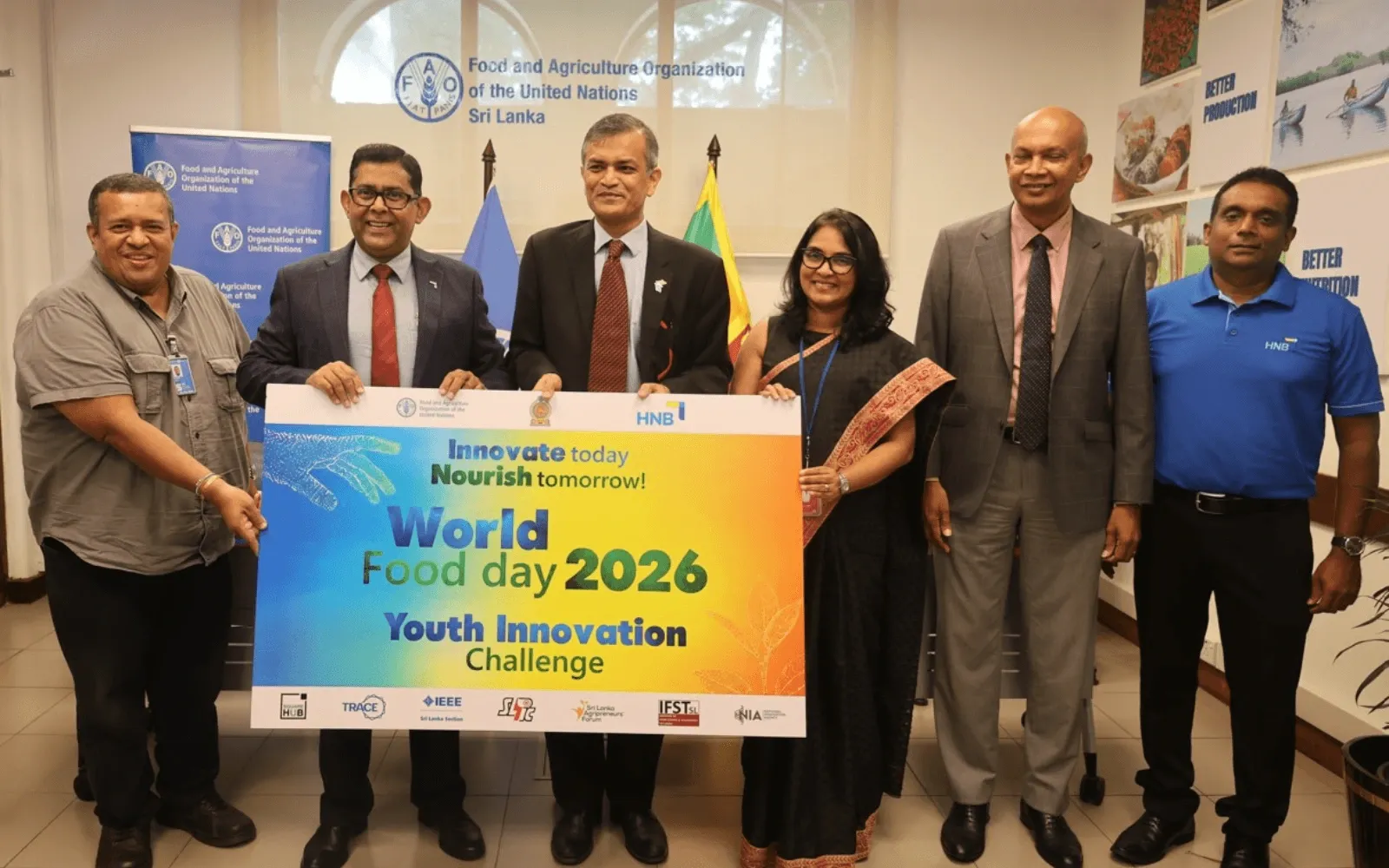
The Food and Agriculture Organization, working with Sri Lanka's Ministry of Education and Hatton National Bank, has launched a nationwide competition inviting university students to develop innovative solutions for the country's agricultural and food system challenges.
The World Food Day 2026 Youth Innovation Challenge, unveiled to mark the October 16 observance, aims to tap into the creativity and entrepreneurial potential of university students across Sri Lanka. Operating under the theme "Innovate Today – Nourish Tomorrow," the initiative seeks practical, scalable solutions to strengthen the country's agrifood systems while promoting sustainable practices and food security.
Sri Lanka's agricultural sector faces multiple interconnected challenges, including significant post-harvest losses, climate-related pressures, inefficient water usage, pest and disease threats, weak market connections, and fisheries spoilage. According to the FAO and its partners, the country's universities possess considerable research, engineering, and technological expertise that can be directed toward addressing these issues through innovation. The competition welcomes multidisciplinary teams from both state and private universities to submit solutions in agriculture, fisheries, livestock, environmental sustainability, climate resilience, food security and nutrition.
The competition follows a structured multi-stage process beginning with concept note submissions. Approximately 25 teams will advance to an online pitching round, from which 10 teams will be selected to develop prototypes with mentorship from technical experts. The top finalists will present their innovations at national World Food Day celebrations, where judges and potential investors will evaluate the top five teams. Prize money will be awarded to the top three teams, while all finalists receive national recognition and networking opportunities with government, academia and the private sector.
The initiative brings together multiple government ministries—including Agriculture, Fisheries, Environment, Health and Science—alongside technical partners such as IEEE, the Sri Lanka Inventors Commission, and various innovation agencies. Prime Minister Dr Harini Amarasuriya stated the challenge represents an opportunity for students to apply their learning to real-world problems while strengthening innovation ecosystems in higher education.