Astronauts aboard the International Space Station have demonstrated the ability to cultivate Red Russian kale and Wasabi mustard greens in microgravity, marking progress toward sustainable food systems for long-duration missions to the Moon and Mars.
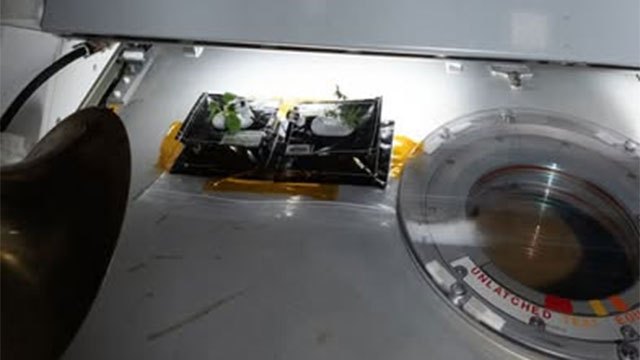
Astronauts stationed on the International Space Station have achieved a significant breakthrough in space agriculture by growing sprouts of Red Russian kale and Wasabi mustard greens in microgravity environments. The ISS revealed the development through an Instagram announcement, highlighting that the plants are flourishing in various locations throughout the orbiting laboratory rather than being confined to a single dedicated growing facility.
The research initiative represents an important step toward enabling future space exploration missions. According to the ISS, the work is laying groundwork for astronauts to cultivate fresh, nutritious food during extended journeys to the Moon, Mars, and beyond. Long-duration space missions present significant challenges for crew sustainability, necessitating both reliable food sources and biological systems capable of recycling oxygen and carbon dioxide naturally.
Demonstrating that crops can sprout rapidly and remain healthy without Earth's gravitational pull brings scientists considerably closer to establishing viable agricultural systems in space environments. This capability could prove essential for maintaining astronaut health and autonomy during missions spanning months or years beyond Earth's orbit.
The announcement generated substantial engagement on social media, with users expressing enthusiasm for the research. Observers noted the contrast between thriving space-grown plants and struggling terrestrial gardens, while others expressed optimism about the potential implications for astrobotany and future space exploration endeavors.


-849303_850x460.jpg)