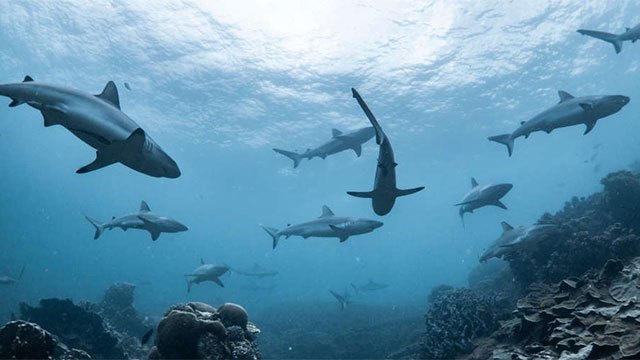
Scientists at the University of Delaware are using specially equipped sharks as mobile ocean observers to collect data that could improve hurricane intensity predictions along the U.S. East Coast.
Researchers at the University of Delaware have initiated a novel project that harnesses sharks as instruments for gathering oceanographic data relevant to hurricane forecasting. The initiative involves attaching small electronic sensors known as CTD tags to migratory shark species, enabling the measurement of ocean temperature, salinity, and depth as the animals move through Atlantic waters. According to Aaron Carlisle, the project's principal investigator, this approach capitalizes on sharks' natural advantages: they are abundant, widely distributed, and more readily accessible than protected marine mammals typically used in such research.
The research focuses particularly on the uppermost ocean layer, or mixed layer, which plays a crucial role in determining hurricane strength. Carlisle explains that warmer waters in this zone provide the energy that intensifies hurricanes, making accurate temperature measurements essential for predicting storm severity. The team has identified four shark species as particularly suitable for the project: shortfin makos, blue sharks, smooth hammerheads, and juvenile great whites. These species surface frequently enough to transmit satellite data and inhabit regions where hurricane research is most valuable.
The tagging process begins each May when migratory species approach coastal waters. Research teams venture 30 to 40 miles offshore to capture sharks using baited lines, then attach tags to their dorsal fins in a process lasting under five minutes. Tags are designed using corrosion-prone materials so they eventually detach naturally. Each shark receives a health assessment before release to ensure data integrity, as stressed animals may not behave typically. The project operates under institutional animal care protocols to minimize any impact on the marine creatures.
If successful, the data collected could provide more accurate hurricane forecasts for coastal communities from North Carolina to Massachusetts, potentially improving emergency preparedness along the East Coast. Researchers characterize the project as mutually beneficial—enabling better understanding of these marine animals while providing practical applications for storm prediction.