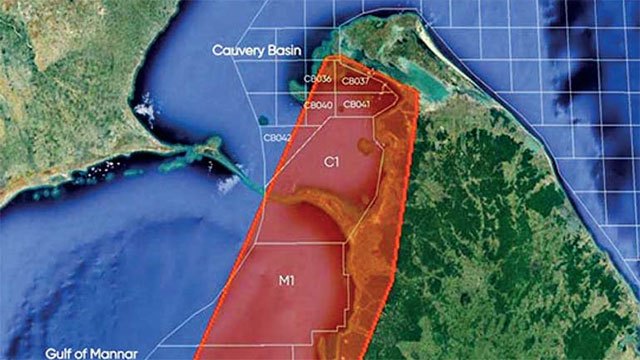
Sri Lanka is inviting international energy companies to explore four offshore blocks in the Mannar Basin, marking the government's first attempt to attract oil and gas investment under President Anura Kumara Dissanayake.
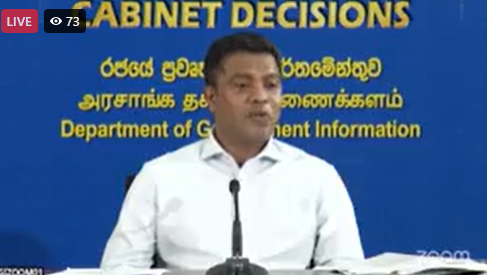
Sri Lanka has launched a new licensing round for offshore oil and gas exploration, offering four blocks in the Northwestern Mannar Basin to international investors. The move represents the first initiative by the current government to revitalize the sector following previous unsuccessful attempts. Energy Minister Anura Karunathilaka stated that the country is seeking experienced international energy companies to partner with Sri Lanka in the responsible development of natural resources in the region.
The Mannar Basin, located between southern India and northwestern Sri Lanka, is believed to contain substantial hydrocarbon reserves. A former energy minister indicated in 2021 that the basin may hold approximately $260 billion worth of oil and gas resources, while earlier estimates suggest over one million barrels of oil exist in a 30,000 square kilometre area off the north coast. The four exploration blocks vary in size, with the second block covering 5,689.05 square kilometres and the fourth spanning 11,728.3 square kilometres.
This licensing round differs from Sri Lanka's previous 2007 attempt, when blocks were assigned to Chinese and Indian companies on a nomination basis. This time, the bidding process remains open to all qualified international firms. Petroleum Development Authority Director General Neil De Silva confirmed that no countries are excluded from participation. The government has emphasized that updated scientific data and improved regulatory frameworks provide better prospects for commercial success.
Sri Lanka's oil and gas exploration history stretches back to the late 1960s, with significant developments occurring in 2011 when Cairn India discovered natural gas in deepwater wells. However, commercial production never materialized due to extraction complexities and infrastructure limitations, leading Cairn to exit in 2015. The country has since modernized its approach through the 2021 Petroleum Resources Act and established the Petroleum Development Authority to manage exploration rights and attract foreign investment.