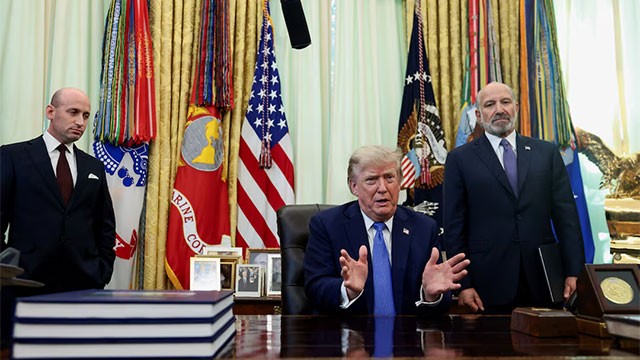
President Trump has signed executive orders attempting to restrict birthright citizenship through a narrower approach, following the Supreme Court's rejection of his previous attempt to limit the constitutional protection in June.
President Donald Trump signed two executive orders on Thursday seeking to curtail birthright citizenship, marking a renewed attempt to challenge a constitutional provision after the U.S. Supreme Court struck down his initial effort. The previous executive order, issued on Trump's first day in office, had directed federal agencies not to recognize citizenship for children born in the United States to parents who are neither citizens nor legal permanent residents. The Supreme Court rejected this measure as unconstitutional in a 6-3 ruling on June 30.
The administration contends that the new directive operates differently and falls outside the scope of the Supreme Court's previous ruling. The orders specifically target what the White House describes as "birth tourism," where foreign nationals travel to the U.S. to give birth and secure citizenship for their children. White House aide Stephen Miller announced at Thursday's signing that the practice is now "hereby banned." The Center for Immigration Studies, which advocates for lower immigration levels, estimated between 20,000 and 25,000 mothers engaged in birth tourism during a 2016-2017 period, though no official government figures exist on the practice's scope.
The new orders also address children born to foreign government employees and those classified as alien enemies, and could affect births in U.S. territories if Congress passes proposed legislation. Legal experts expressed uncertainty about the orders' enforceability given the Supreme Court ruling. Immigration advocates and civil rights organizations, including the ACLU and UnidosUS, have indicated the orders will likely face court challenges, arguing they represent an attempt to circumvent the Supreme Court's constitutional interpretation. Chief Justice John Roberts had written in the June decision that the 14th Amendment's citizenship clause extends to all free-born persons, describing citizenship as "the right to have rights."