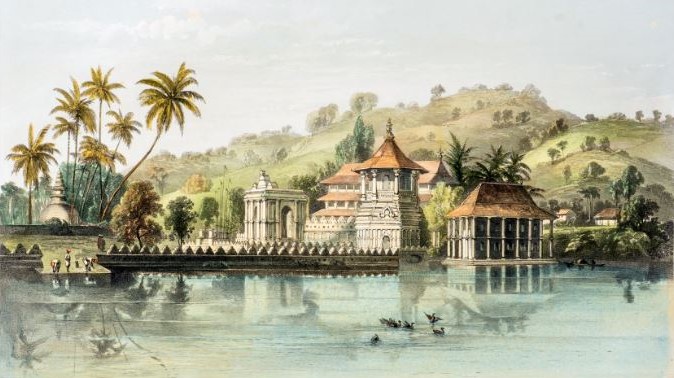

A new exhibition opening in Colombo displays rare artworks created by British artists during the 19th century, documenting the island's landscapes, people, and colonial period through oil paintings, watercolours, and lithographs.
The George Keyt Foundation and the British High Commission are presenting "19th Century Views of Ceylon," an exhibition featuring artworks that chronicle how British artists portrayed Sri Lanka during the 1800s. The collection spans from early topographical studies to later atmospheric interpretations, offering insight into the visual documentation of the colonial period. The exhibition runs on July 31st and August 1st at Westminster House in Colombo, with free admission available upon advance registration.
The exhibition traces the work of numerous artists who documented the island over the century. Early contributors included Henry Salt, whose 1809 depiction of Point de Galle represented a significant advance in precision, and Samuel Daniell, whose twelve published plates in 1808 provided detailed natural-history illustrations. As British colonial expansion progressed inland, officers such as William Thomas Lyttleton and John Deschamps created visual records of Kandy, coastal regions, and daily life. Later artists including Andrew Nicholl and Edward Lear expanded the artistic approach, with Lear's 1874 visit producing over seventy drawings that remain among the most recognised visual records from the period.
The collection includes work by Constance Frederica Gordon-Cumming, the exhibition's sole female artist, whose vivid personal sketches arrived with her in 1873. Her later travel writings combined observation with reflection on colonial realities. Other notable figures documented specific aspects: Thomas Fraser focused on engineering and landscape structure, while Charles O'Brien created illustrations accompanying historical texts on Ceylon. Some artists, including James Stephanoff, produced significant works without visiting the island.
Organisers note that these artworks serve dual purposes, preserving visual records of landscapes, buildings, and inhabitants while simultaneously reflecting the perspectives, assumptions, and power structures of the imperial era. A companion book featuring nearly 100 illustrations is available for purchase, with promotional pricing ending August 1st.