A new exhibition opening in Colombo brings together rare paintings, watercolours, and lithographs by British artists who documented the island during the 1800s, offering insights into how colonial-era observers visualized Ceylon's landscapes, people, and culture.
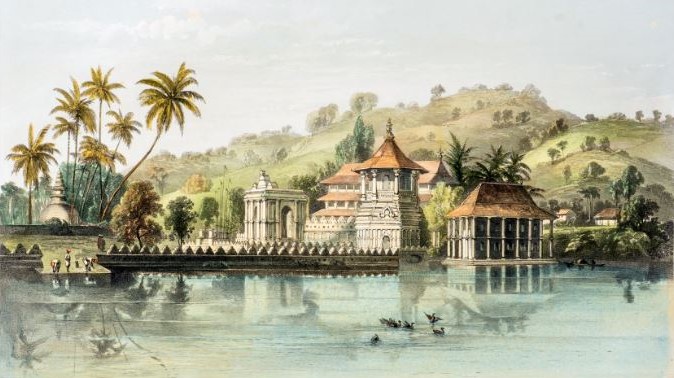
The George Keyt Foundation and the British High Commission have jointly organized "19th Century Views of Ceylon," an exhibition displaying artwork by British artists working during the colonial period. Running on July 31st and August 1st at Westminster House in Colombo, the show features oil paintings, watercolours, and aquatint lithographs that trace how the island was visually interpreted and documented by foreign artists over the course of a century.
The exhibition spans works from pioneering artists such as Henry Salt, whose 1809 plate of Point de Galle represented early professional British artistic observation of Ceylon, to Samuel Daniell, whose twelve published plates from 1808 are recognized as significant natural-history illustrations showcasing the island's ecology. As British colonial expansion progressed inland, military officers including Lieutenant William Thomas Lyttleton and Captain John Deschamps created views of Kandy, the western coast, and daily colonial life. Later artists like Andrew Nicholl, who arrived in 1846 as the first painting instructor at the Colombo Academy, developed broader decorative styles and produced over eighty engravings during his time on the island.
Notably, the exhibition includes work by Edward Lear, the literary figure famous for nonsense writing and limericks, who created over seventy drawings and watercolours during a brief 1874 visit. Constance Frederica Gordon-Cumming, the sole woman represented, arrived in 1873 and maintained a disciplined sketching practice, later publishing her experiences in a 1892 travel memoir combining writing with personal reflection. Her inclusion alongside male artists of the period reflects both the growing participation of women in artistic documentation and the complex perspectives through which Ceylon was portrayed during the imperial era.
Organizers emphasize that these artworks provide dual historical value—they preserve visual records of 19th-century Ceylon's landscapes, architecture, flora, and fauna, while simultaneously reflecting the beliefs, assumptions, and power structures embedded in colonial representation. The exhibition invites contemporary audiences to examine this artistic legacy critically. Entry is free but requires advance registration through www.georgekeytfoundation.com. A companion publication featuring nearly 100 illustrations is available for purchase at introductory pricing through August 1st.