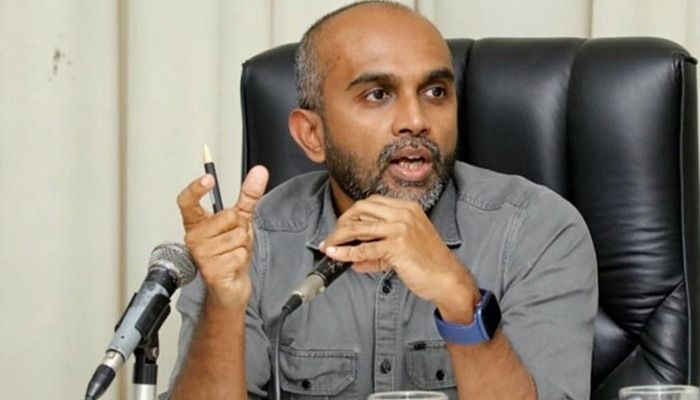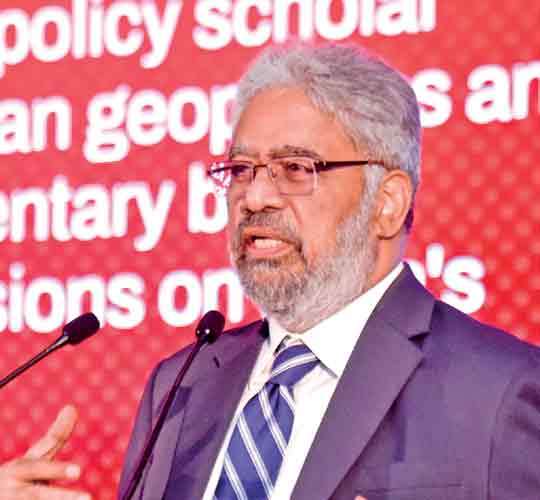
Despite India's emergence as an economic power, it significantly lags behind Sri Lanka in per capita income levels, according to geopolitics expert Prof. C. Raja Mohan, who advocates for deeper bilateral economic cooperation between the two nations.
Geopolitics expert Prof. C. Raja Mohan highlighted a striking economic disparity between India and Sri Lanka during remarks at the Lanka India Business Association's India Calling forum, noting that India's per capita income of approximately $2,800 remains considerably below Sri Lanka's $5,000. While acknowledging India's rise as an economic power, Prof. Mohan stressed that the country still faces substantial development challenges relative to its smaller neighbour.
Prof. Mohan attributed this gap partly to differences in aggregate economic scale, explaining that India's larger overall economy grants it greater international influence despite lower individual income levels. He observed that the global economic landscape is undergoing fundamental transformation, with the fragmentation of previous globalisation models creating space for geopolitically-driven decisions and increased emphasis on regional partnerships and supply chain resilience.
The expert advocated for strengthened India-Sri Lanka economic integration, though he cautioned against cooperation driven solely by geographic proximity. Instead, he emphasised that investment and trade decisions should prioritize economic outcomes, including considerations of capital costs, borrowing expenses, and long-term equity returns rather than adopting an "all money is welcome" approach. Prof. Mohan suggested bilateral cooperation could advance independently of broader South Asian mechanisms like SAARC.
Beyond traditional trade, Prof. Mohan identified artificial intelligence as a promising avenue for cooperation, particularly in workforce preparation for technological disruption. On security matters, he called for mutual sensitivity to each country's concerns and interests, while recommending enhanced collaboration among Sri Lanka, India, and other Indian Ocean nations. He positioned India as bearing primary responsibility for making regional integration economically beneficial, arguing that the nation must become a more attractive partner for its neighbours while generating positive outcomes across the region.