Ex-Election Commissioner Mahinda Deshapriya has criticized the functioning of Provincial Councils without elected members, describing it as incompatible with democratic governance and raising concerns about broader implications for representative institutions.
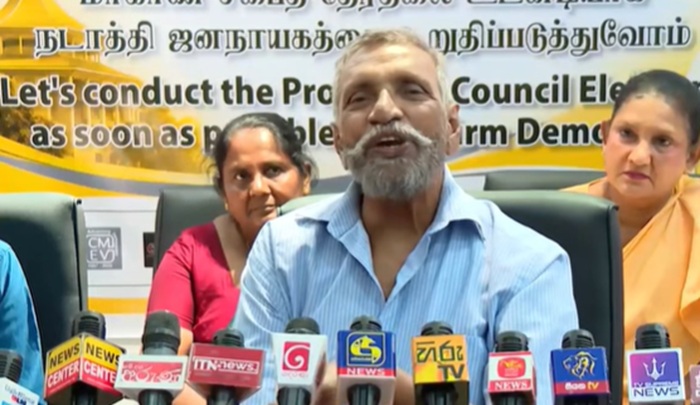
Former Election Commissioner Mahinda Deshapriya has voiced strong objections to the continued operation of Provincial Councils staffed entirely by appointed officials rather than elected representatives. Speaking to media, Deshapriya characterized the arrangement as fundamentally at odds with democratic principles, asserting that public representative bodies require public representatives to maintain legitimacy.
Deshapriya acknowledged that some stakeholders argue Provincial Councils can perform administrative functions without elected members, but rejected this reasoning. He emphasized that officials cannot adequately represent public interests, as they lack direct accountability to constituents in the way elected representatives do. Such arrangements, he cautioned, undermine the core tenets of representative democracy.
The former commissioner warned of a potential domino effect, suggesting that permitting Provincial Councils to operate without elections could establish a troubling precedent applicable to other governing bodies. "If Provincial Councils can function this way, the same logic could extend to Parliament and local councils," Deshapriya stated, framing the issue as a threat to institutional governance structures across multiple levels.
Deshapriya indicated he plans to elaborate on his position during a public address scheduled for September 15, which coincides with World Democracy Day. He expressed optimism that the government would use the intervening time to announce concrete plans regarding the long-overdue Provincial Council elections, including the proposed format and timeline for balloting.