

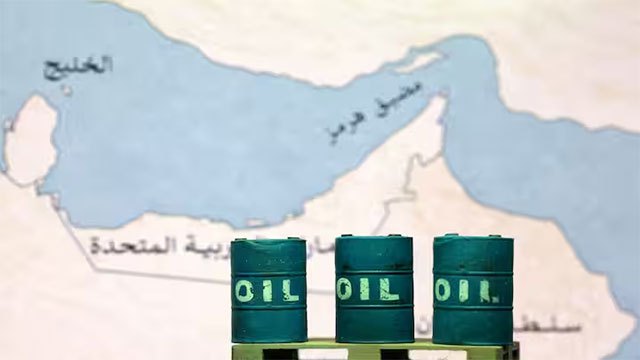
Global crude markets rose Monday following conflicting signals over the potential reopening of the Strait of Hormuz, while regional military tensions continued to threaten supply routes.
International oil benchmarks gained ground on Monday as traders reassessed the likelihood of reopening the Strait of Hormuz, a critical waterway that handled approximately one-fifth of the world's oil supply before regional hostilities escalated. Brent crude futures increased by 91 cents to $84.46 per barrel, while U.S. West Texas Intermediate crude rose 61 cents to $78.79 per barrel, reversing last week's decline of over 7 percent.
The price recovery reflects caution among market participants regarding progress in negotiations between Iran and Oman over new shipping arrangements. Although Iran indicated on Sunday that discussions had reached an advanced stage, officials in Tehran attached significant conditions to any reopening, including U.S. compensation for military actions against Iranian targets. Iranian Foreign Minister Abbas Araqchi stated that Tehran would not commence direct talks with Washington while the United States remained in breach of an interim agreement reached in June.
Analysts attributed the measured market response to previous cycles of hope and disappointment in the negotiations. Tim Waterer, chief market analyst at KCM Trade, noted that traders were demanding concrete evidence—such as documented vessel movements or formal agreements—before further reducing the risk premium built into prices due to supply concerns.
Regional military incidents continued to weigh on market sentiment. Iran-aligned Houthis claimed responsibility for an attack on Saudi Aramco's Jazan refinery on Sunday, occurring shortly after Saudi Arabia established a defence partnership with Turkey and Pakistan. Additionally, the UAE's ADNOC reported that 15 of its vessels had experienced attacks while transiting the Strait of Hormuz since the conflict commenced.









-850276_850x460.jpg)