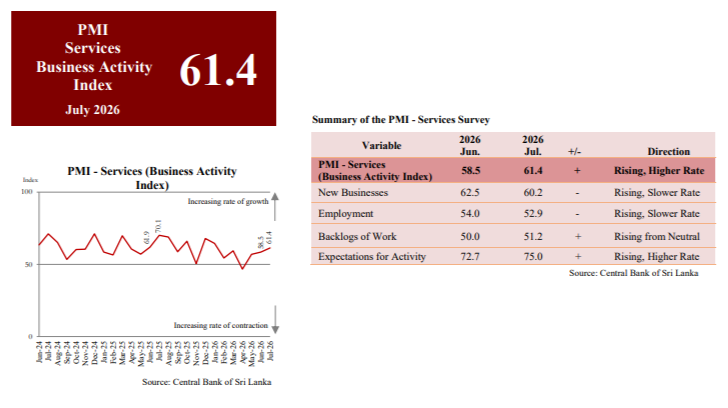
Sri Lanka's services sector expanded significantly in July 2026 with a PMI reading of 61.4, while manufacturing also grew, supported by improvements in tourism expectations and food production. Meanwhile, the government secured a $200 million ADB loan for post-cyclone reconstruction and approved new pharmaceutical and…
Sri Lanka's services sector demonstrated continued expansion in July 2026, with the Central Bank's Purchasing Managers Index reaching 61.4, up from 58.5 in June. The growth was broad-based across service categories, particularly in transportation, financial services, and professional services sectors. Employment levels improved during the period, driven by new hiring and reduced staff resignations, though work backlogs accumulated compared to the previous month.
The manufacturing sector also expanded during the same period, registering a PMI of 55.0 compared to 53.0 in June. The food and beverage sector led growth, with the New Orders and Production sub-indices both improving. Employment in manufacturing remained relatively stable, while supply-chain pressures continued to extend supplier delivery times. According to the Central Bank, positive business expectations for the coming quarter are being fueled by anticipated growth in tourist arrivals during the Kandy Esala Perahera season, though global uncertainties continue to pose downside risks to the economic outlook.
On the fiscal front, the government secured a $200 million loan agreement with the Asian Development Bank to fund a five-year reconstruction program following Cyclone Ditwah. The project will support rehabilitation of cyclone-damaged roads with enhanced climate resilience, restoration of irrigation systems, and livelihood assistance to affected farming and fishing communities. Additionally, the cabinet approved the National Pharmaceutical Policy for 2026–2030, replacing an outdated 2005 framework to ensure affordable access to essential medicines while promoting domestic pharmaceutical manufacturing.
In capital markets, Bank of Ceylon announced plans to raise 10 billion rupees through the issuance of Basel III compliant Additional Tier 1 Capital debentures to strengthen its capital adequacy ratio. The rupee was quoted at 331.62/68 to the US dollar, showing marginal appreciation from the previous day, while Treasury bill yields and bond markets remained relatively stable.