Sri Lanka's cabinet has endorsed a revised national pharmaceutical policy for 2026–2030 aimed at ensuring affordable and safe medicines, while recent economic indicators show expansion in services and manufacturing sectors despite lingering global uncertainties.
Sri Lanka's government has approved a new National Pharmaceutical Policy covering 2026 through 2030, marking the first major update to the regulatory framework in over two decades. Health Minister Nalinda Jayatissa stated that the policy seeks to guarantee uninterrupted access to high-quality medicines at sustainable prices while promoting efficient domestic pharmaceutical production. The previous policy, adopted in 2005, had become outdated, with earlier attempts to revise it between 2020 and 2025 remaining incomplete. The updated framework addresses current supply chain disruptions, evolving global market conditions, and new opportunities for local manufacturing capabilities.
Under the approved policy, the government has established maximum retail price controls covering more than 1,000 medicine varieties across 60 categories. However, price adjustment requests from importers citing exchange rate fluctuations remain pending due to an ongoing Court of Appeal hearing. Officials emphasized that the policy promotes cost-effective medicine use by healthcare providers and consumers while maintaining international quality standards.
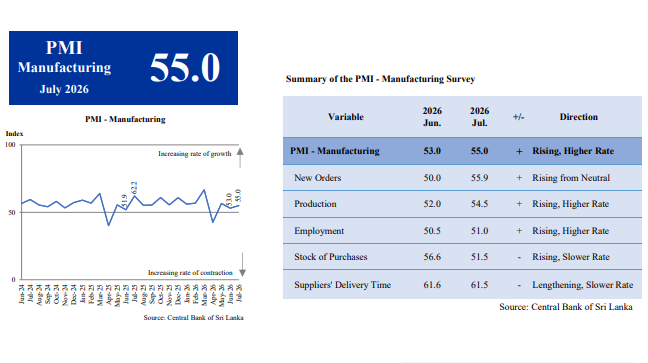
Economic activity indicators released Wednesday showed continued expansion across key sectors. The services sector recorded a Purchasing Managers Index of 61.4 in July, up from 58.5 the previous month, driven primarily by transportation, financial, and professional services. Manufacturing also expanded to 55.0 from 53.0, with food and beverage production leading gains in new orders and output. Employment increased in both sectors, though supply-chain pressures continued to extend supplier delivery times. Central Bank officials noted positive business expectations for the coming quarter, supported by anticipated growth in tourism linked to the Kandy Esala Perahera season, while cautioning that broader global uncertainties pose ongoing risks to the economic outlook.