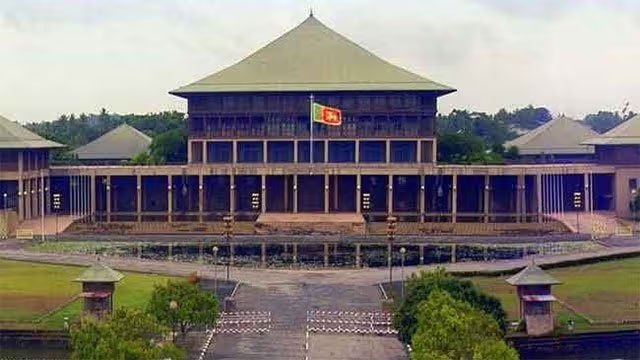
A special audit of Parliament's eighth and ninth sessions has revealed that senior officials including the Speaker, Deputy Speaker, and Secretary-General received unlimited fuel allowances and vehicle privileges that far exceeded allocations for comparable public service positions.
An audit examining parliamentary spending during the eighth and ninth sessions has documented substantial irregularities in fuel and vehicle allowances granted to senior officials. The report found that the Speaker operated without any restrictions on fuel consumption, using an average of 3,994 liters monthly in 2023 and 6,122 liters in 2024—representing increases of 66% and 155% respectively compared to 2022. This resulted in annual fuel expenditure of Rs. 19.37 million in 2023 and Rs. 26.05 million in 2024 for the Speaker alone.
The audit identified similar excessive privileges across other senior positions. The Deputy Speaker received 21,299 liters of fuel valued at Rs. 8.55 million for a private vehicle in 2023-2024, in addition to three official vehicles with fuel allocations that exceeded prescribed limits. The Chairman of Committees similarly received three official vehicles with unrestricted fuel provisions despite no formal limits being established for the position. The Secretary-General consumed 15,063 liters of fuel worth Rs. 6.07 million between 2022 and 2024, averaging 5,031 liters annually—roughly 2,300 liters more than allocated to ministry secretaries holding comparable ranks.
The report noted that officials at Deputy Secretary-General and Assistant Secretary-General levels received unlimited fuel for official travel while being permitted up to 1,200 kilometers monthly for private purposes, compared to the 960-kilometer limit for other departmental heads. The audit observed these benefits were unavailable to officials of equivalent rank elsewhere in the public service. Additionally, the government lost an estimated Rs. 2.71 million in recoverable revenue between September 2015 and June 2022 due to inadequate charges for excess private vehicle use, though adjustments from July 2022 onwards corrected this issue.