
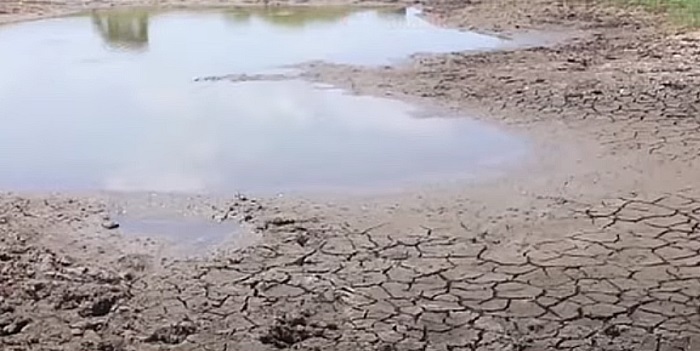
An ongoing dry spell has devastated dairy farming regions and left tens of thousands without adequate water supplies across seven districts, prompting emergency relief efforts and religious interventions.
Dairy farmers in Anuradhapura and Polonnaruwa are confronting a livestock crisis as prolonged dry weather has severely restricted fodder and water availability for cattle. According to farming communities, milk production has plummeted dramatically—from the typical seven to eight litres per day to just one to two litres—creating significant economic hardship for those dependent on dairy income.
The water shortage extends well beyond farming areas. The Disaster Management Centre reports that approximately 84,545 people across 26,457 families in seven districts have been affected by the drought conditions. Emergency drinking water distribution has been established across six districts, with 75,734 people from 24,144 families currently receiving supplies. Monaragala district requires the most assistance, with 35,639 residents receiving emergency water, followed by Batticaloa with 28,253 people. Smaller numbers are being supported in Ampara, Polonnaruwa, and Ratnapura.
Reservoir levels have declined significantly across the affected regions, including the Giritale Reservoir in Polonnaruwa, Senanayake Samudraya in Ampara, and multiple water sources in Anuradhapura district. The ecological impact is also evident, with fish deaths reported in some areas and herds of wild elephants from Somawathiya National Park reportedly traveling toward Janaranjana Wewa in search of water.
In response to the crisis, the Mawbima Surakime Sanvidhanaya has coordinated nationwide rain-invoking religious observances involving Buddhist monks, reflecting the severity of conditions and the community's appeal for relief.