More than two decades after its discovery in Sri Lanka's rainforests, researchers are conducting extensive studies on the elusive Serendib Scops Owl to understand its behavior, distribution, and conservation needs.
Sri Lanka's rainforests harbor one of the world's rarest and most recently discovered owl species—the Serendib Scops Owl. First identified in 2001 after researchers heard its distinctive call for six years without seeing the bird, this endemic species was formally described in 2004, marking Sri Lanka's first newly identified bird species since 1868. The owl now appears on the country's Rs. 20 currency note, though few people know the remarkable story of its discovery.
Measuring just 16 to 17 centimetres long, the Serendib Scops Owl possesses remarkable camouflage with reddish-brown plumage that blends seamlessly with forest debris. Despite over two decades of scientific awareness, researchers still understand little about its breeding patterns, nesting behavior, population size, and specific habitat requirements. This knowledge gap has prompted a new generation of scientists to investigate the species more thoroughly.
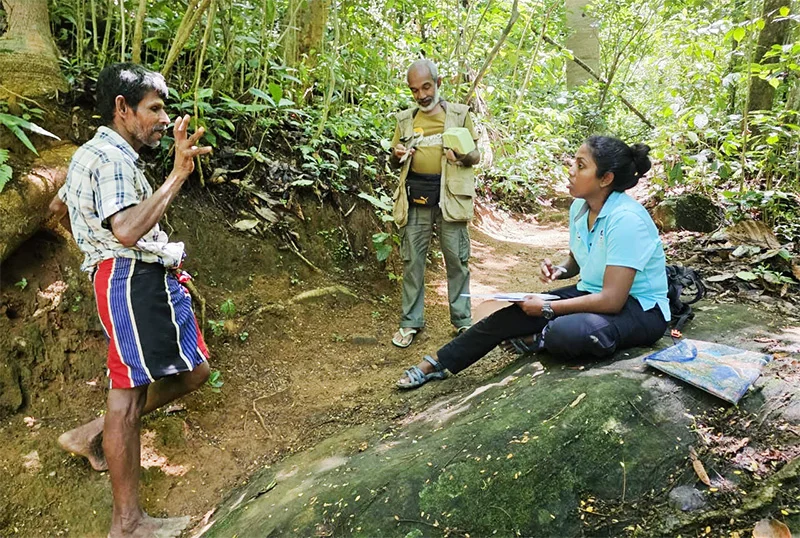
Under the EDGE of Existence Fellowship Programme, research officer Waruni Tissera leads a collaborative project involving local and international institutions to study the owl's distribution and ecology. Since May 2025, the team has conducted nocturnal surveys across the Kelani Valley Forest Reserve and Sinharaja Rainforest, navigating challenging terrain to record the owl's calls and habitat characteristics. The research also incorporates citizen science observations from birdwatchers and nature enthusiasts.
Conservation efforts extend beyond fieldwork. The project has engaged over 200 schoolchildren in awareness programs around rainforest communities, working to dispel myths about nocturnal birds and highlight the ecological importance of forest protection. The Serendib Scops Owl inhabits only Sri Lanka's wet zone rainforests, making its survival dependent on protecting these fragile ecosystems threatened by habitat degradation, fragmentation, and unregulated tourism.
-849873_850x460.jpg)