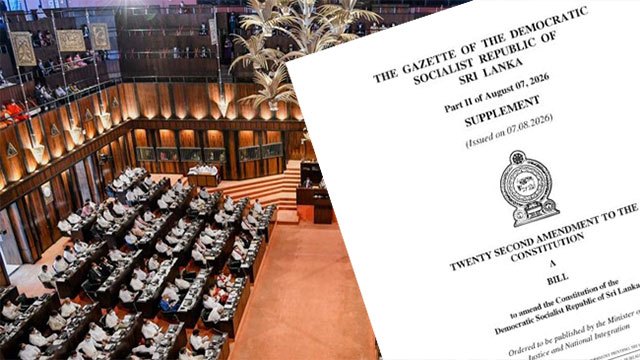
Sri Lanka's government is advancing a draft constitutional amendment to raise mandatory retirement ages for Supreme Court and Court of Appeal judges, but faces significant resistance from the Bar Association, international bodies, and legal experts who question its necessity and independence implications.
The Bar Association of Sri Lanka concluded inconclusive discussions with President Anura Kumara Dissanayake this week regarding the proposed 22nd constitutional amendment, which would extend the mandatory retirement ages of judges in the country's superior courts. Despite the failed talks, the government has signalled its determination to proceed with the amendment.
The government justifies the amendment as part of a broader strategy to address a substantial case backlog within the judiciary. However, critics point out internal inconsistencies in this rationale. According to legal experts cited in available accounts, approximately 96 percent of the 1.1 million outstanding cases are pending before lower courts—Magistrates' Courts, District Courts, and High Courts—rather than the Supreme Court and Court of Appeal. Additionally, the government has not filled four existing vacancies each in both superior courts, a measure that critics argue would more directly address case congestion than raising retirement ages.
Opposition to the amendment centres on two key concerns: its applicability to sitting judges, which critics worry could compromise judicial independence through potential quid pro quo arrangements, and the government's position that no referendum is required for its enactment. This stance conflicts with a 2022 Supreme Court determination stating that changing retirement ages for incumbent judges requires a referendum. International bodies have also expressed alarm; the United Nations Special Rapporteur on the independence of judges and lawyers warned that the amendment could undermine judicial independence if implemented as reported. The Bar Association, International Association of Judges, Commonwealth Lawyers' Association, and LAWASIA have similarly opposed the measure.
Commentators have drawn parallels to Zimbabwe's 2020 constitutional amendment raising retirement ages for that country's top judges, widely viewed as designed to retain a specific judge facing imminent retirement. The timing of Sri Lanka's amendment—following an opposition challenge for the government to delay implementation until year's end—has fuelled similar concerns about its true motivation.