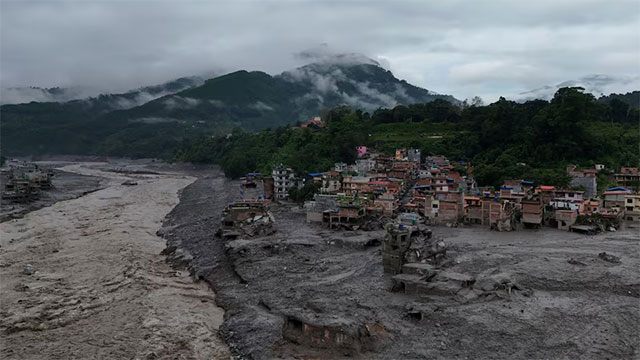
A devastating flood triggered by a glacier collapse has left nearly 1,500 people missing across Nepal and China's Tibet region, with rescue operations ongoing and the death toll expected to rise significantly.
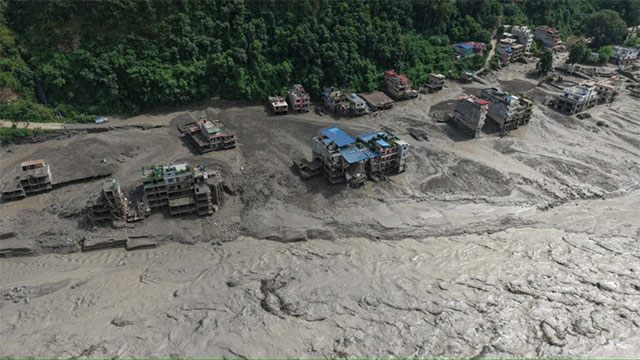
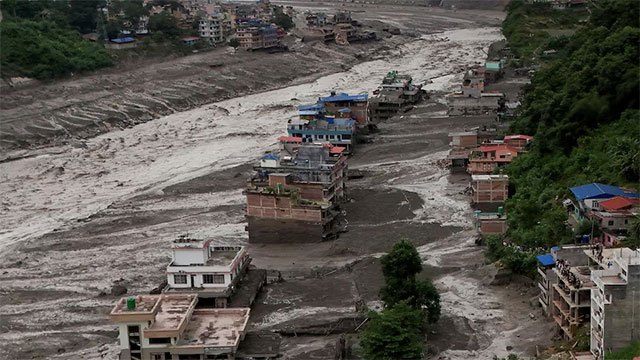
A catastrophic flood swept through the Himalayan border region between Nepal and Tibet on Wednesday after a massive wall of mud and rock collapsed into a river, sending torrents of debris through mountain communities. Authorities reported nearly 1,500 people missing across both territories, including at least 800 foreigners, with the confirmed death toll standing at 165 but expected to climb as recovery efforts continue. Police spokesperson Abi Narayan Kafle told Reuters that "this will go up, as we have resumed the search and more bodies are expected to be recovered."
In Nepal alone, approximately 826 people are missing, with nearly 600 being foreign nationals from over two dozen countries. The largest contingents include 177 Indians, 63 Americans, 34 Australians, 33 British citizens and 25 Canadians. Chinese authorities reported 558 people missing in Tibet's Gyirong county, including 260 foreign nationals. Many of the missing were pilgrims traveling to the sacred Mount Kailash and Lake Mansarovar, sites revered in Hindu, Buddhist and other religious traditions.
Survivors described harrowing escapes from the advancing wall of mud and water. One 68-year-old man recounted watching his wife swept away as he fled to his home's terrace, later being rescued by helicopter. Another survivor clung to a mango tree as his workplace was engulfed. The U.S. Geological Survey clarified that the initial earthquake reading of magnitude 4.4 actually represented seismic energy generated by the glacial collapse itself, followed by the debris flow.
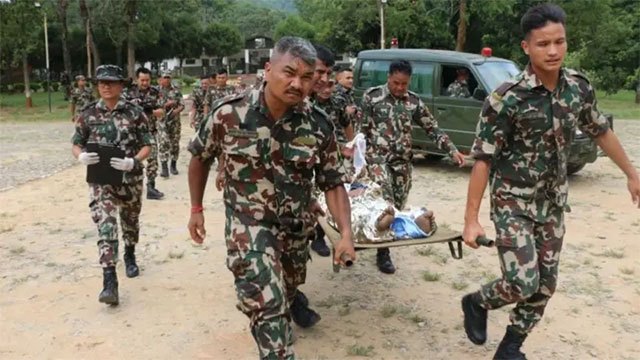
Rescue operations have mobilized over 5,000 army and police personnel, with helicopters conducting search and supply drops across affected districts in Nuwakot and Dhading. Chinese authorities identified an additional risk from a dammed lake upstream that could complicate rescue efforts. International assistance has begun, with the U.S. State Department providing $500,000 in aid and sending a disaster response adviser, while the United Nations is deploying supplies and personnel to support affected communities.

-852646_850x460.jpg)