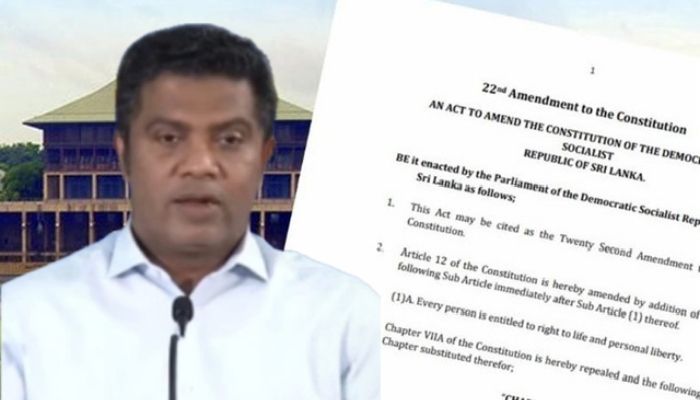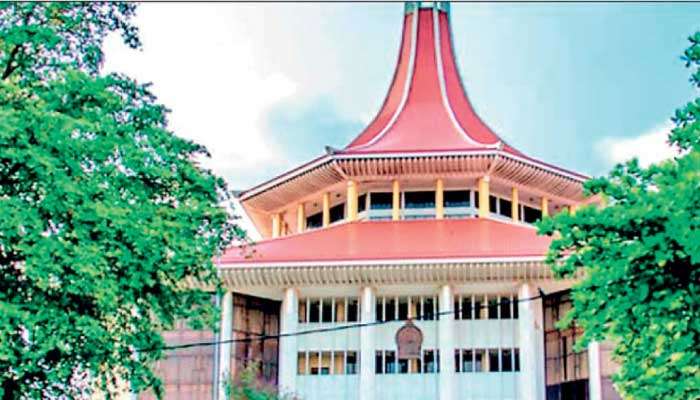
Civil society organisation the National Movement for Social Justice has cautioned lawmakers that the proposed 22nd Amendment could place the Supreme Court in the position of determining matters directly affecting its own judges' tenure, potentially compromising judicial independence and public confidence.
The National Movement for Social Justice (NMSJ) has urged Parliament to carefully reconsider the 22nd Amendment to the Constitution, citing concerns that the measure could create a constitutional conflict if the Supreme Court is required to rule on the validity of a law extending its own judges' terms. The civil society group emphasised that such a scenario would violate the longstanding legal principle that no person should judge their own case.
The gazetted amendment has already attracted attention from multiple parties considering judicial review challenges. Should these disputes reach the Supreme Court, judges would potentially face a conflict of interest by determining the constitutionality of legislation that directly benefits their own tenure. The NMSJ noted that the Constitution currently vests all powers to examine legislative constitutionality exclusively with the Supreme Court, making this situation unavoidable under the current legal framework.
The NMSJ highlighted that several nations have addressed similar governance challenges through alternative mechanisms. Countries including Canada, England, Austria, Germany, South Korea, and South Africa employ separate constitutional courts or special judicial panels featuring retired judges to handle sensitive constitutional matters. Sri Lanka currently lacks such institutional safeguards, leaving the judiciary vulnerable to perceptions of bias.
The organisation proposed that the amendment could be redesigned to require public approval through referendum, which would place the final decision directly with citizens rather than the court itself, thereby avoiding the conflict of interest. The NMSJ stressed that maintaining public confidence in judicial independence is essential, particularly given Sri Lanka's history of civil society efforts to protect the judiciary's integrity. The group called for multi-party discussions involving all stakeholders before proceeding with the amendment.