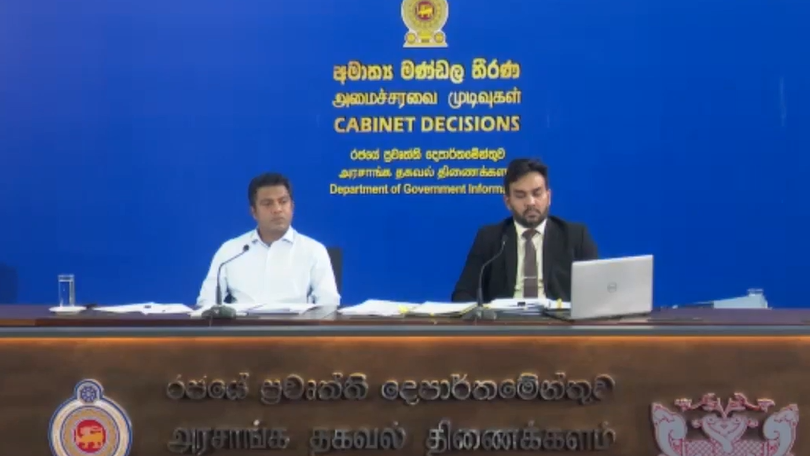
Sri Lanka's government approved several legislative and economic measures on Tuesday, including designations for Port City enterprises, a cyclone reconstruction loan, and a new counterterrorism bill to replace existing legislation.
Sri Lanka's cabinet has moved forward with designating three companies as Primary Enterprises of Strategic Importance within the Colombo Port City. Marina Hotel Holdings, Prime Melva Port City, and Homelands Port City have received the designation, with gazette notifications now set to be presented to Parliament to satisfy statutory requirements under the Colombo Port City Economic Commission Act. The approvals were granted between March and May 2026.
In response to the devastation caused by Cyclone Ditwah, the government signed a USD 200 million loan agreement with the Asian Development Bank to fund a five-year reconstruction project spanning 2026-2030. The financing will support rehabilitation of cyclone-damaged roads, restoration of irrigation systems, and livelihood assistance for affected households. The Ministry of Transport, Highways and Urban Development will execute the project, addressing infrastructure damage and income losses faced by rural, coastal, and agricultural communities impacted by the storm.
On the legislative front, the cabinet approved publishing a draft Protection of the State from Terrorism Bill in the Government Gazette for parliamentary consideration. The proposed legislation aims to replace the Prevention of Terrorism Act of 1979. Minister Nalinda Jayatissa stated the new bill incorporates safeguards to protect democratic freedoms and fundamental rights while addressing organized crime and terrorism. This move comes after the ruling National People's Power pledged during elections to abolish the PTA, though officials argue a modern legal framework remains necessary for national security.
Additionally, Sri Lanka and Poland are set to sign an extradition agreement following cabinet approval, enabling convicted nationals to serve sentences in their home country. The government also digitalized the Excise Department's operational management system to enhance efficiency, transparency, and revenue collection while reducing corruption and service delivery times.