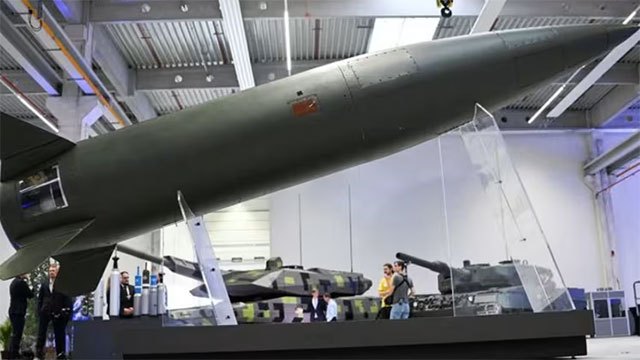
According to sources familiar with military data, the United States has exhausted virtually all of its long-range precision missiles during five months of operations involving Iran, raising concerns about military readiness for future conflicts.
The US military has consumed nearly its entire inventory of long-range precision missiles, including Army Tactical Missile Systems (ATACMS) and Precision Strike Missiles (PrSM), according to three people with access to classified supply data. These weapons, each costing over US$1 million, form a critical component of the military's arsenal by enabling accurate strikes from considerable distances. The significant depletion has sparked internal debate within the Trump administration about the sustainability of continued large-scale operations against Iran without compromising the nation's ability to respond to other global threats.
The stockpile drawdown reflects strategic decisions to minimize riskier piloted bombing missions in favour of precision strikes. However, the approach has left the military with limited options if large-scale operations resume. A fourth source indicated that while Central Command—which oversees Middle East operations—has largely exhausted pre-war land-based missile supplies, it has been able to replenish from stockpiles held elsewhere globally. The White House responded by asserting that the US maintains "far more munitions than anyone in the world," with defence companies currently producing munitions at record levels.
Beyond offensive capabilities, defensive weapons have also experienced significant depletion. According to the Center for Strategic and International Studies, approximately 65 per cent of Patriot interceptors and at least 38 per cent of THAAD ballistic missile interceptors have been expended since February. The US has similarly used roughly half of its global Tomahawk cruise missile supply. Military analysts warn that while certain munitions are being produced at unprecedented rates, sustained operations could exhaust supplies faster than manufacturing can replenish them, potentially affecting the military's capacity to deter adversaries including Russia and China.