The Central Bank of Sri Lanka has released its second Monetary Policy Report for 2026, projecting elevated inflation in the near term while highlighting recent monetary tightening and external sector vulnerabilities.
The Central Bank of Sri Lanka released its August 2026 Monetary Policy Report on Thursday, presenting an assessment of economic conditions and the rationale for recent policy decisions. The biannual publication, mandated under the Central Bank of Sri Lanka Act No. 16 of 2023, reflects deliberations from the Monetary Policy Board's July review and offers forward-looking analysis on inflation, growth prospects, and emerging risks.
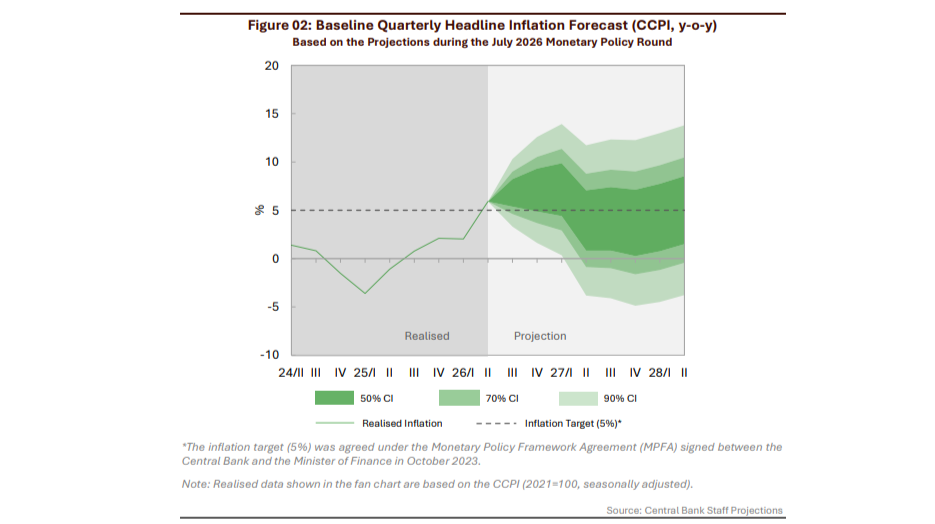
Inflation remains a central concern for policymakers. Headline inflation surged from an average of 2 percent during the first quarter to elevated levels driven by global energy price shocks, domestic fuel adjustments, and broader sectoral spillovers. The Central Bank projects inflation will remain high in the near term before gradually converging toward its 5 percent target. In response, the CBSL tightened monetary policy in May 2026, reversing an accommodative stance that had persisted since mid-2023. This shift has already prompted upward adjustments in market interest rates across the economy.
On the growth front, Sri Lanka's economy expanded 5.1 percent during the first quarter, sustaining momentum from 2024 and 2025. However, the Central Bank flagged multiple downside risks, including renewed geopolitical tensions, commodity price volatility, trade disruptions, and adverse weather patterns potentially linked to El Niño phenomena. The external sector has shown signs of stress, shifting from three years of current account surpluses to a deficit in the first half of 2026, although remittance inflows have provided partial cushioning. The Sri Lankan rupee, which remained stable early in the year, faced depreciation pressure between March and June amid geopolitical spillovers.
The report noted that while medium-term inflation expectations remain anchored, upside risks dominate amid global volatility. Private sector credit expansion is expected to moderate under tighter financial conditions, while fiscal performance improved in the first five months of 2026 through revenue-based consolidation efforts.