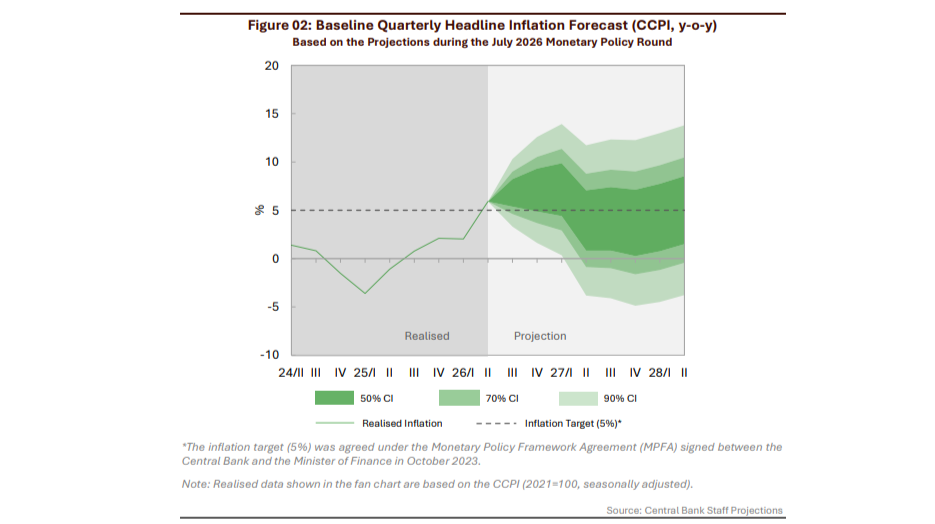
The Central Bank of Sri Lanka has warned that inflation will remain elevated above its 5 percent target in the near term, driven primarily by rising global energy prices and supply-side disruptions stemming from geopolitical tensions in West Asia.
Sri Lanka's inflation trajectory has shifted sharply upward following a period of relative stability, according to the Central Bank of Sri Lanka's latest monetary policy assessment. Headline inflation, which stood at around 2 percent in the first quarter of 2026, has since accelerated substantially and now sits above the central bank's target. The quarterly average for the second quarter reached 5.9 percent, ending an eight-quarter stretch during which inflation had remained below the bank's stipulated margin.
The central bank attributes the acceleration primarily to external pressures, particularly the impact of heightened geopolitical tensions in West Asia since late February 2026. These international disruptions have translated into higher global energy prices, which have fed directly into domestic fuel and electricity costs and subsequently affected other sectors of the economy. The inflation surge is characterised as largely supply-driven rather than demand-driven, with energy and transport costs rising notably following recent adjustments to fuel, electricity, and liquefied petroleum gas prices.
Looking ahead, the central bank projects that inflation will remain elevated in the immediate term before gradually moderating toward its target as supply-side pressures ease and monetary policy measures take effect. The forecast assumes that West Asian tensions will diminish and their economic spillovers will subside. Food inflation is also expected to remain elevated due to volatile commodity prices and higher transportation costs. The central bank acknowledged upside risks to its inflation outlook, citing uncertainty in global commodity markets and potential adverse weather conditions associated with El Niño.
In response to these pressures, the central bank tightened its monetary policy stance in May 2026, marking an end to the accommodative stance that had been maintained since mid-2023. Despite the current inflationary pressures, the bank indicated that inflation expectations remain broadly anchored around the target over the medium term.