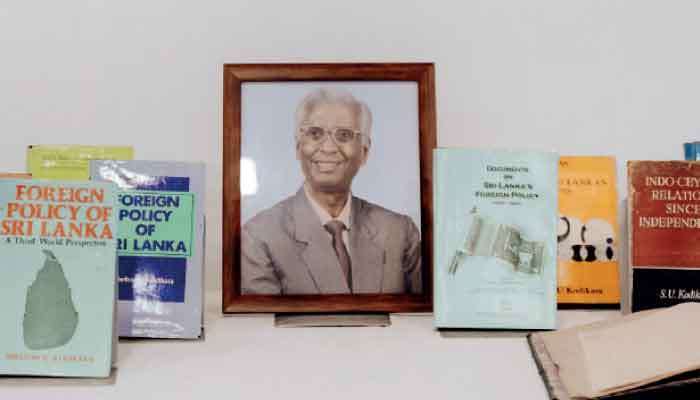
The Regional Centre for Strategic Studies commemorated the late Professor Shelton Kodikara, a pioneering figure in Sri Lankan international relations scholarship, through a memorial oration featuring discussions on evolving global power dynamics and the relevance of non-aligned thinking.
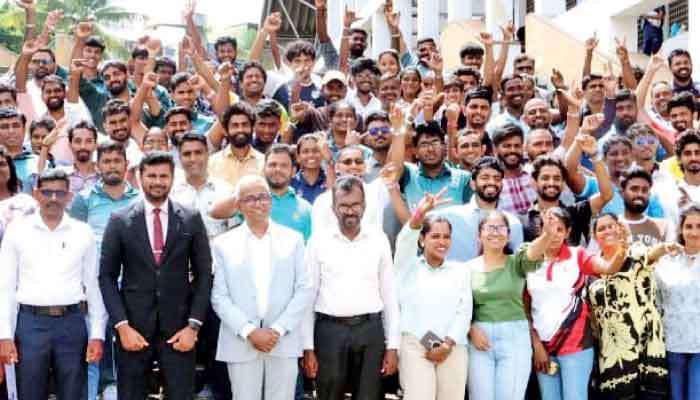
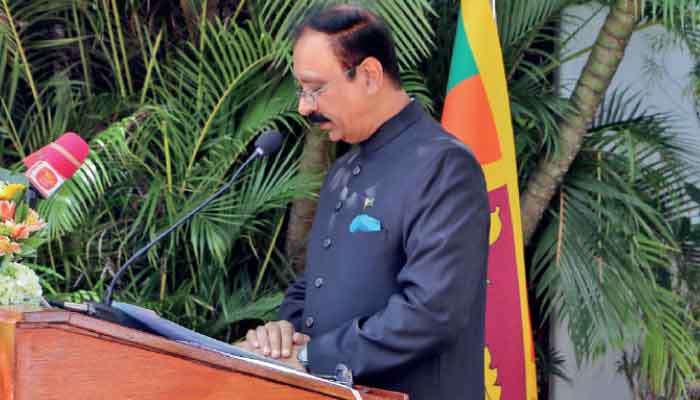
A memorial oration organised by the Regional Centre for Strategic Studies (RCSS) in collaboration with the Bandaranaike Centre for International Studies took place on 8 August at the BCIS auditorium, bringing together academics, diplomats, policymakers and students to honour Professor Shelton Kodikara, the founder of the RCSS and a foundational figure in Sri Lankan international relations scholarship. The event featured a keynote address by former President Chandrika Bandaranaike Kumaratunga, who characterised Kodikara not simply as an academic but as a defining intellectual voice for the nation's foreign policy thinking.
Kumaratunga noted that Sri Lanka's post-independence diplomatic practice had historically operated with limited academic grounding, and that Kodikara fundamentally transformed this dynamic by bridging scholarship and statecraft. She underscored the continued relevance of his work in addressing contemporary foreign policy challenges facing Sri Lanka and the broader Global South, particularly as smaller states navigate an increasingly uncertain geopolitical landscape. Kumaratunga referenced the 50th anniversary of the Fifth Non-Aligned Movement Summit held in Colombo in 1976, observing that traditional non-alignment principles are being reinterpreted as modern strategic hedging and multi-alignment approaches.
Delivering the Kodikara Memorial Oration, Distinguished Professor Amitav Acharya of American University presented arguments centring on global power reconfiguration beyond Western dominance. Rather than viewing contemporary shifts as a simple transition between rival powers, Acharya proposed the concept of a "Global Multiplex"—a decentralised international order where influence is distributed among multiple state and non-state actors rather than concentrated in any single centre. He framed this perspective as aligned with Kodikara's broader project of expanding international relations thinking beyond traditionally Eurocentric frameworks.
BCIS Executive Director Priyanthi Fernando highlighted Kodikara's exceptional commitment to scholarship, recalling his dedication to conducting classes despite travelling from Kandy to Colombo. The event, attended by RCSS alumni and international studies participants, reflected the enduring influence of Kodikara's institutional and intellectual contributions to regional scholarship.