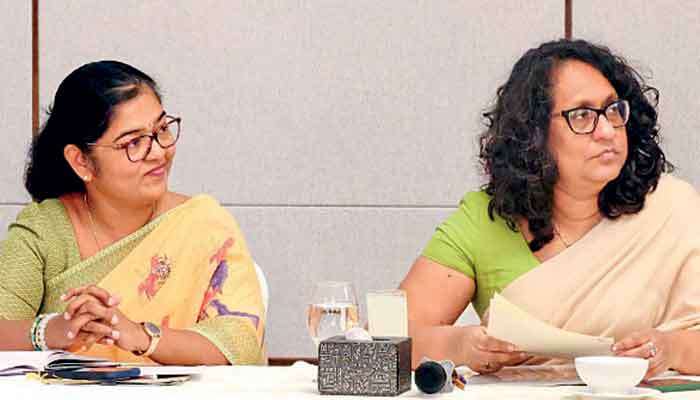
A roundtable discussion convened by Sri Lanka's Women's Parliamentary Caucus has called for strategic government investment in childcare, eldercare, and disability services, arguing that such spending is essential to boost female workforce participation and drive economic growth.
Sri Lanka faces significant barriers to women's economic participation, with nearly 75% of working-age women excluded from the labour force primarily due to caregiving responsibilities. Despite achieving high educational standards, women continue to shoulder disproportionate unpaid care work that limits their employment and entrepreneurship opportunities. A roundtable organised by the Women's Parliamentary Caucus and the Westminster Foundation for Democracy brought together parliamentarians, government officials, civil society representatives, and researchers to address this structural challenge.
Prime Minister Dr. Harini Amarasuriya framed care investment as both a social responsibility and a strategic economic policy, rejecting the notion that care spending represents mere expenditure. She emphasised that accessible childcare, early childhood education, eldercare services, and disability support are essential infrastructure for an inclusive society. According to the International Labour Organisation, every dollar invested in Sri Lanka's care sector generates a return of $7.76, supporting the economic case for increased funding.
Parliament's role centres on three strategic areas, according to Speaker Dr. Jagath Wickramaratne: direct investment in care infrastructure; legislative reforms protecting workers with care responsibilities; and integrating the care economy into national fiscal policy and accounting. Women and Child Affairs Minister Saroja Paulraj stressed the need for gender-responsive budgeting that embeds gender analysis into economic policies and national budgets.
The discussion yielded several recommendations, including funding time-use surveys to quantify unpaid care work, establishing sustainable financing for assistive devices, launching after-school programmes in low-income schools, and scaling up eldercare centres across all districts. Participants agreed that these measures, supported by robust evidence and cross-party parliamentary support, should be incorporated into the next government budget.