India has significantly expanded its educational assistance to Sri Lanka's plantation community, doubling annual scholarship recipients and increasing monthly stipends through an enhanced framework announced at a ceremony this week.
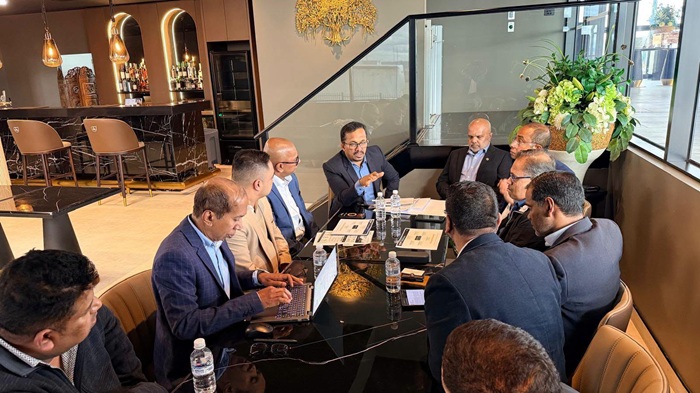
The High Commission of India held a scholarship awarding ceremony on August 10 at the Taj Samudra Hotel to mark the implementation of an enhanced support framework for the Ceylon Estate Workers Education Trust (CEWET). The event, attended by Deputy Minister of Plantation and Community Infrastructure Sunderlingam Pradeep and Indian High Commissioner Santosh Jha, highlighted new commitments made following India's Vice President C. P. Radhakrishnan's visit to Sri Lanka in April.
India has contributed an additional one-time grant of INR 200 million to CEWET's corpus fund, enabling the trust to double its annual scholarship beneficiaries from 350 to 700 students. Monthly stipends have also been significantly increased to LKR 2,500 for Advanced Level students and LKR 7,500 for university undergraduates. High Commissioner Jha outlined a broader INR 75 Crore educational package that includes STEM training for over 2,000 teachers, study materials for 10,000 students, infrastructure improvements in nine plantation schools, and the establishment of 60 smart classrooms.
Deputy Minister Pradeep expressed gratitude to Indian Prime Minister Narendra Modi and the government, characterizing the relationship as a "brotherly bond." He emphasized that educational investment serves as an effective tool for long-term community development and addressing historical inequalities within the plantation sector. The initiative reflects ongoing collaboration between Sri Lanka and India in human resource development, complementing existing programmes such as ICCR scholarships and ITEC professional training.

-850985_850x460.jpg)