Sri Lanka's government plans to consolidate four textile and crafts agencies into a single National Handicrafts Authority by 2027, aiming to modernize the sector while preserving cultural heritage.
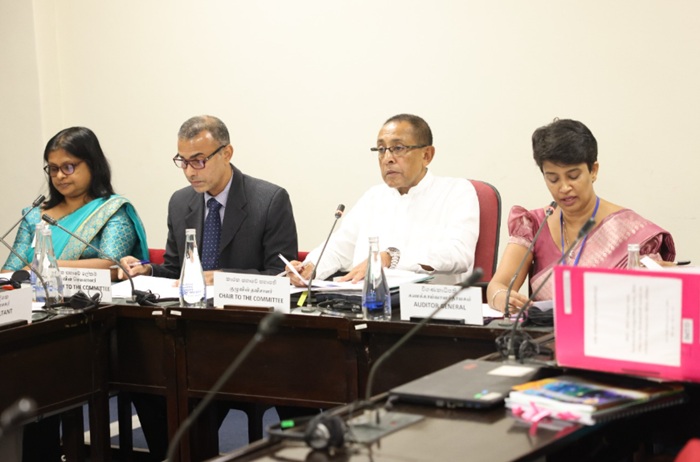
The Government intends to establish a unified National Handicrafts Authority by 2027 through a merger of four existing organizations: the Department of Textile Industries, the National Crafts Council, the National Design Centre, and Laksala. This consolidation was discussed at a recent meeting of the Committee on Public Accounts (COPA) in Parliament, chaired by MP Kabir Hashim, where officials outlined plans to revitalize Sri Lanka's traditional textile and handicrafts industries.
According to Government officials, the new authority is designed to position the sector as both a cultural asset and an economically competitive industry. The restructuring initiative aims to integrate contemporary design practices and technology with traditional craftsmanship, while simultaneously targeting international markets. Efforts are also underway to attract younger participants through expanded higher education and technical training programs, particularly via the Sri Lanka Institute of Textile and Apparel (SLITA).
COPA's review of Auditor General reports revealed significant operational challenges facing the current textile sector. These include critical human resource shortages, a suspension of textile instructor recruitment, and inefficient utilization of machinery acquired during the COVID-19 pandemic. The Committee also noted underutilization of the Katubedda Training Centre and insufficient income generation from Government-owned tourist bungalows. Training completion data highlighted concerns, with only 456 of 720 enrolled students completing courses between 2021 and 2025, representing a dropout rate exceeding 40%.
The Committee emphasized that successful implementation requires both adherence to the restructuring timeline and more efficient allocation of public resources. Officials reported that per-trainee Government expenditure ranged from Rs. 700,000 to Rs. 1.1 million, underscoring the importance of improved resource management as the sector transitions toward modernization.