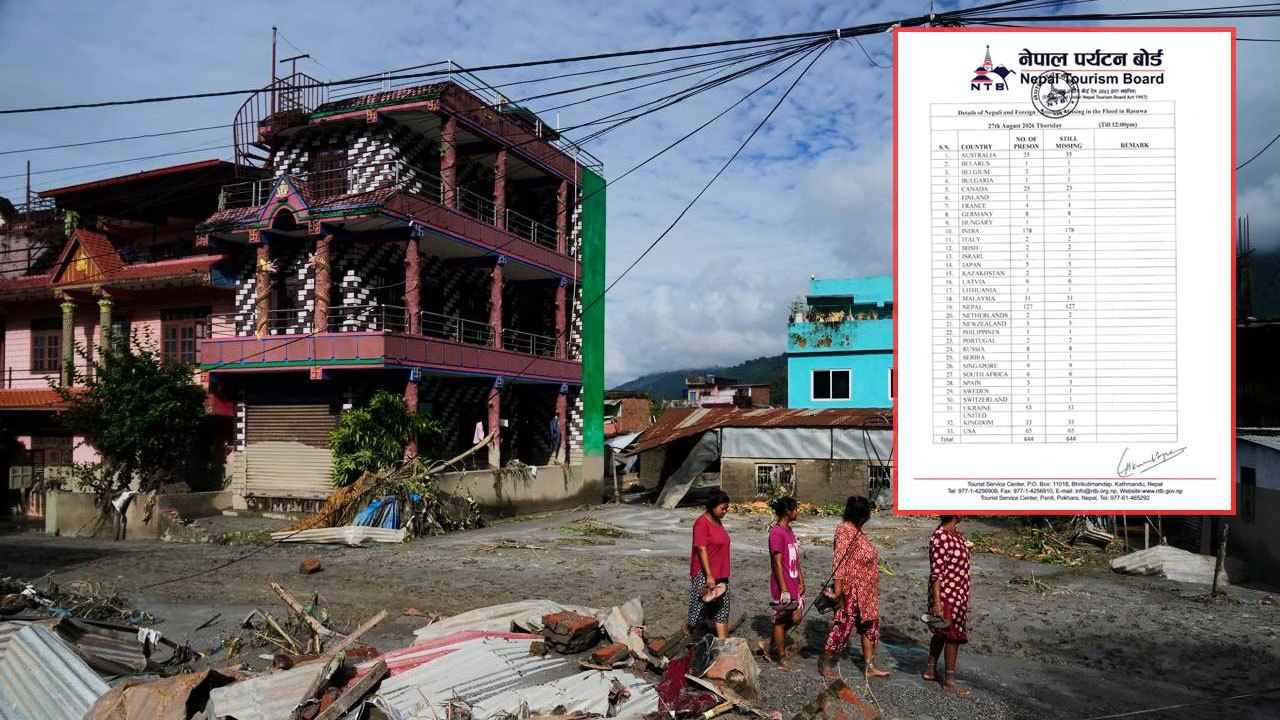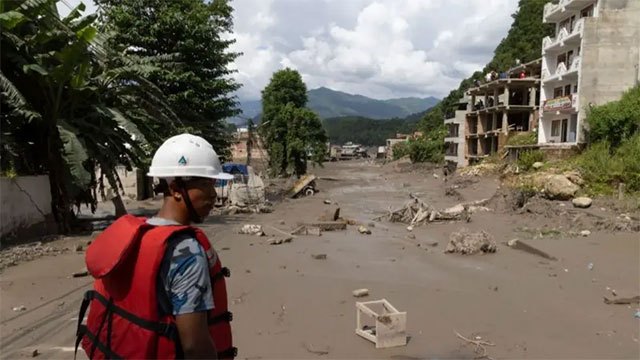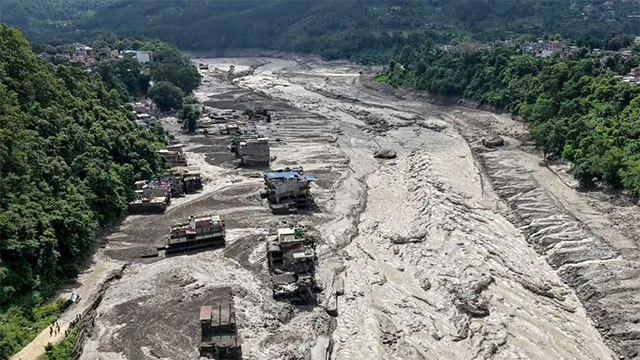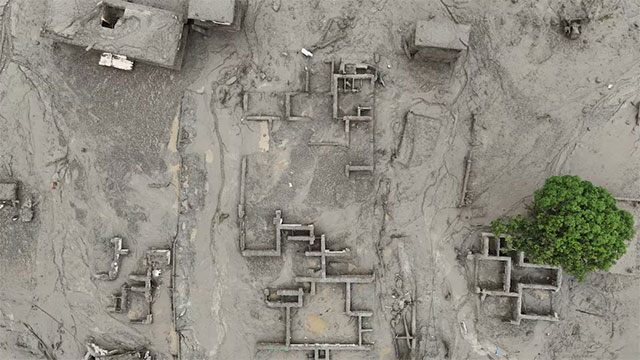
The US Geological Survey has revised its initial assessment of Wednesday's disaster in Nepal, determining that a glacial collapse and debris flow—rather than an earthquake—triggered the catastrophic impacts that followed.
The US Geological Survey withdrew its initial earthquake classification for an event that struck Nepal on Wednesday, issuing a correction on Thursday morning. The agency had first reported the incident as a magnitude 4.4 earthquake but subsequently determined through additional seismic analysis and satellite imagery that the event was actually a glacial collapse accompanied by a debris flow, with no earthquake occurring.
Nepali authorities had independently suggested to the BBC that a substantial mass of ice detached from a mountainside, bringing down rock and other sediment in its wake. This assessment aligns with the USGS's revised understanding of the incident.
The glacial collapse and resulting debris flow produced severe downstream consequences, though scientists are continuing to investigate the precise sequence of events that led to the disaster. The correction highlights how initial seismic readings can sometimes be misleading when natural phenomena other than earthquakes generate seismic signals detectable by monitoring stations.