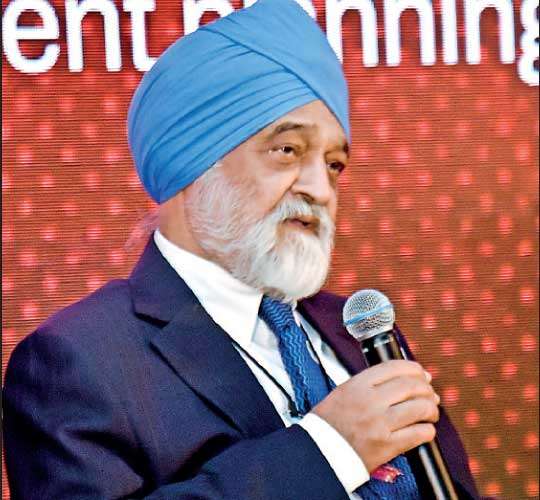
Speaking at a business forum in Colombo, architect of India's 1990s economic reforms Montek Singh Ahluwalia urged Sri Lanka to move beyond macroeconomic stability towards comprehensive structural reforms to achieve higher growth rates.
Montek Singh Ahluwalia, a key figure in India's economic transformation during the 1990s, addressed business leaders at the 'India Calling' forum organised by the Lanka India Business Association, emphasizing that sustained economic growth requires difficult structural changes alongside monetary stability. He explained that such reforms inevitably create winners and losers within the economy, making them politically sensitive despite their overall benefit to growth prospects.
Ahluwalia commended Sri Lanka's government for maintaining its International Monetary Fund-supported reform programme despite political pressures during recent elections, noting that international institutions continue to influence investor confidence in smaller economies. He stressed that macroeconomic stability has been restored, but the country now faces a greater challenge: implementing structural reforms to reignite growth. The economist pointed out that foreign investment typically follows domestic investment patterns, as international investors view local business confidence as a reliable indicator of an economy's health.
Addressing potential reform areas, Ahluwalia suggested Sri Lanka examine policies in neighbouring countries rather than only advanced economies, citing Vietnam, Malaysia, Thailand, and Indonesian approaches to labour regulation and business ease. He highlighted land accessibility, labour regulations, business simplification, infrastructure financing, and urban development as priority areas for systematic reform over five to ten years. He also cautioned against excessive trade protection and advised against creating favourable investment terms exclusively for foreign investors at the expense of domestic firms.
Ahluwalia emphasized that reform success depends on domestic debate and consensus-building rather than externally imposed policies, and stressed that businesses must actively participate in policy development. He recommended Sri Lanka leverage public-private partnerships for commercially viable infrastructure projects, preserving limited fiscal resources while maintaining macroeconomic discipline. Throughout his remarks, Ahluwalia underscored that macroeconomic stability remains a precondition for growth, not a substitute for structural transformation.