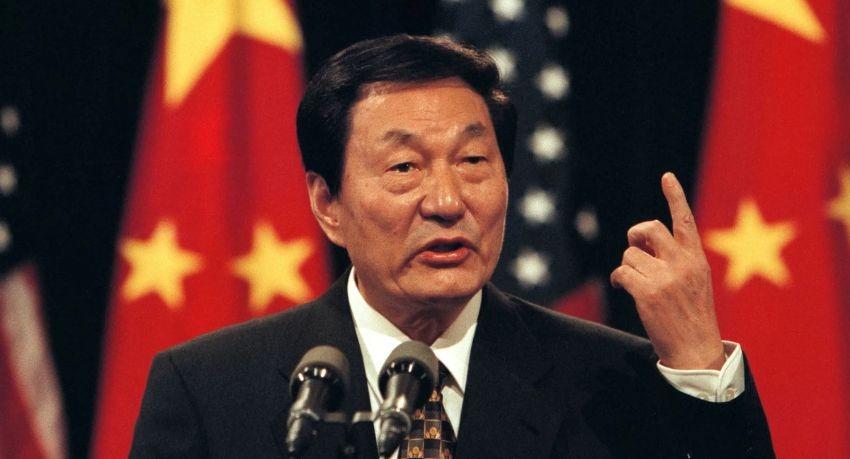
Zhu Rongji, the former Chinese premier credited with steering his country's transformation into a global economic power through market reforms, has died in Beijing at age 97.
Zhu Rongji, who served as premier of China from 1998 to 2003, passed away Wednesday morning following an illness, according to state news agency Xinhua. During his tenure and preceding years as vice premier, Zhu became known as China's "economic czar" for his role in implementing sweeping market liberalization policies that fundamentally reshaped the nation's economy.
Zhu's career spanned one of the most transformative periods in modern Chinese history. Rising from Shanghai's municipal leadership in 1988, he gained prominence for his willingness to implement painful yet consequential reforms. His policies included a major overhaul of the fiscal and taxation system, substantial restructuring of state-owned enterprises, currency system reforms, and efforts to control persistent inflation. However, these measures came at significant social cost—streamlining inefficient state enterprises resulted in approximately 40 million job losses. Despite domestic criticism, Zhu's push to bring China into the World Trade Organization in 2001 ultimately proved pivotal, opening unprecedented access to global markets and investment that fueled decades of economic growth.
Zhu's aggressive approach and uncompromising pragmatism earned him both admirers and detractors within the Communist Party hierarchy. His reputation for speaking candidly and challenging bureaucratic conventions contrasted sharply with typical official discourse. The party's official obituary emphasized his commitment to treating government officials as public servants and his anti-corruption stance. His early career, however, reflected the turbulence of China's political history—he was expelled from the party in the late 1950s for criticizing economic policies and again purged during the Cultural Revolution before eventual rehabilitation following Mao Zedong's death.
Zhu's legacy represents a pivotal chapter in China's modern transformation, guiding the nation from a centrally planned economy toward market mechanisms. His death marks a symbolic endpoint to an era of economic optimism for many Chinese who experienced dramatic poverty reduction and the emergence of a substantial middle class during his tenure. Late US Secretary of State Henry Kissinger previously described Zhu as "a penetrating mind" engaged in "one of the most significant reform programs in modern history."