Sri Lanka's construction sector expanded in June while inflation surged past central bank targets, as Middle East tensions drive up global energy costs and create economic uncertainty across the island nation.
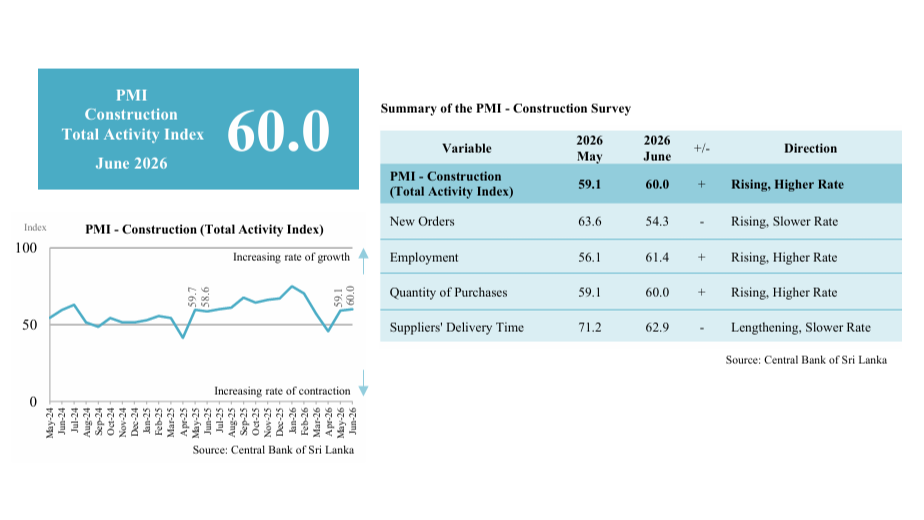
Sri Lanka's construction sector demonstrated growth momentum in June 2026, with activity expanding to a Purchasing Managers Index reading of 60.0, driven by ongoing project execution from previous months. However, the sector faced persistent headwinds, as respondents reported continued shortages of critical materials such as bitumen alongside a scarcity of skilled workers, according to data from the Central Bank of Sri Lanka.
Inflation pressures intensified during the same period, with the Colombo Consumer Price Index rising to 7.3 percent in July 2026 from 6.8 percent in June, surpassing the Central Bank's upper target of 7 percent. Year-on-year food inflation accelerated significantly to 6.3 percent in July from 3.6 percent in June, reflecting broader price adjustments linked to geopolitical disruptions. The government had raised fuel prices approximately 47 percent following supply shortages tied to Middle East escalation and elevated global oil prices.
Despite inflationary pressures, the state petroleum corporation announced it would absorb substantial losses on diesel to keep domestic prices unchanged for August, with Ceylon Petroleum Corporation Chairman Shantha Rajakaruna stating losses of 63 to 70 rupees per liter. Global market diesel prices have risen 158.9 percent compared to pre-war levels, while local prices increased only 135.9 percent. The decision reflects government efforts to shield the economy, with diesel identified as the primary fuel powering the nation's economic activities.
On the financial front, banking sector performance showed resilience. Seylan Bank reported a 16.3 percent increase in quarterly profit to 3.21 billion rupees for the period ending June 30, 2026, with total operating income rising 14.0 percent. The Colombo Stock Exchange indices closed marginally lower on Friday, with the All Share Price Index declining 0.09 percent. Meanwhile, Brand Finance data revealed that Sri Lanka's top 100 brands surged 17 percent to reach a combined value of 652 billion rupees, surpassing 2019 pre-crisis levels, with banking contributing 42 percent of total brand value.
International support arrived as the Asian Development Bank announced a $450 million deployment to Sri Lanka and Cambodia, with $200 million directed toward Sri Lanka's Trade, Investment, and Industry Development Program, including $100 million in additional crisis support to help absorb economic pressures from global conflicts.