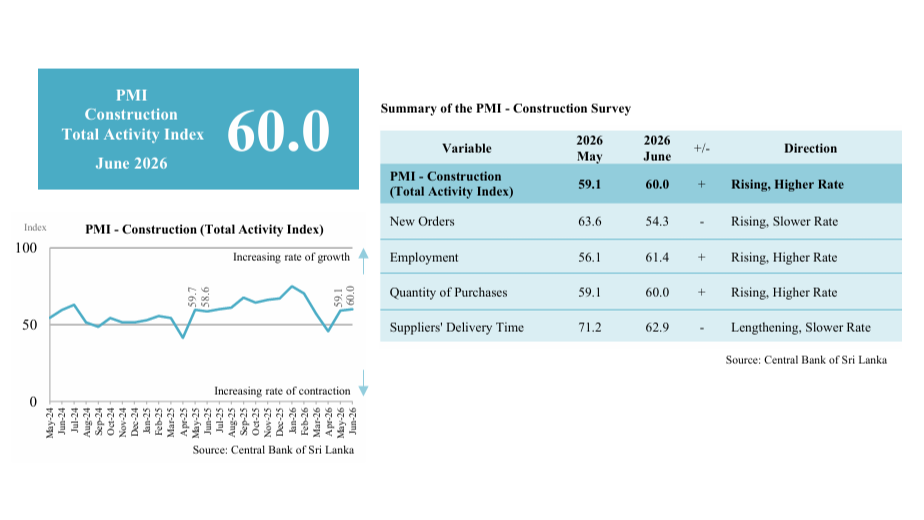
Sri Lanka recorded its third consecutive monthly current account deficit in June 2026, driven by widening trade deficits and declining tourism, though worker remittances provided some relief to foreign exchange pressures.
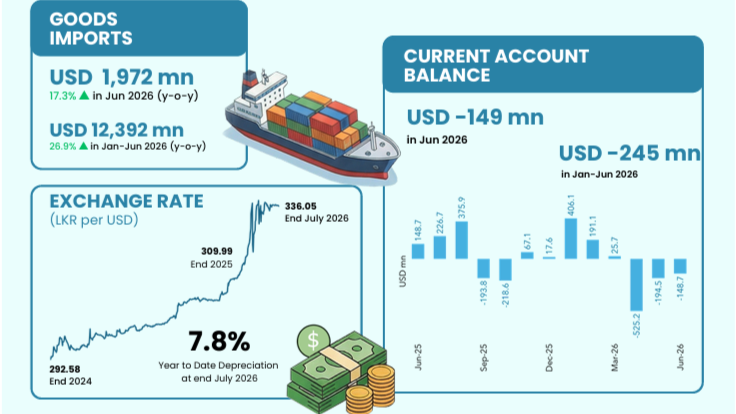
Sri Lanka's current account deficit reached 149 million dollars in June 2026, marking the third consecutive month of external sector weakness, according to data released by the Central Bank of Sri Lanka. The cumulative deficit for the first half of 2026 totalled 245 million dollars, a sharp reversal from the surplus recorded during the same period in 2025. The deterioration has been attributed partly to geopolitical developments in West Asia affecting global trade dynamics.
The merchandise trade deficit emerged as a primary concern, widening significantly to 5.5 billion dollars during the first six months of 2026, compared to 3.3 billion dollars in the corresponding 2025 period. Import expenditure growth outpaced export earnings, with fuel imports particularly straining the external account. Fuel spending surged 58.8 percent year-on-year to reach 3,168 million dollars during the first half, with June alone seeing a 40.2 percent year-on-year increase. In contrast, motor vehicle imports declined, falling to 1,254 million dollars for the half-year period from 1,572 million dollars in the latter half of 2025.
Tourism revenues weakened substantially, with visitor arrivals declining 9.9 percent year-on-year in June and tourism earnings falling 11.8 percent for the half-year to 1,511 million dollars. However, worker remittances provided a counterbalancing factor, rising 23.2 percent year-on-year to 4.6 billion dollars during the first half of 2026, reaching 695 million dollars in June alone. The central bank reported gross official reserves of 6.5 billion dollars by end-June, while the rupee depreciated 7.8 percent against the US dollar on a year-to-date basis through July.