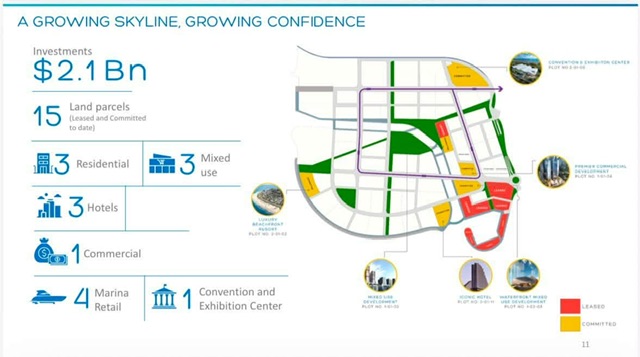
Sri Lanka is targeting further investments of US$4.1 billion in Port City Colombo over the next five years, with US$2.1 billion already confirmed, as the government positions the special economic zone as a regional investment hub.
Sri Lanka's government is pursuing an additional US$4.1 billion in investments for Port City Colombo over the coming five years, according to Deputy Minister of Industry and Entrepreneurship Development Chathuranga Abeysinghe. The announcement comes as the country has already secured US$2.1 billion in confirmed investments for the special economic zone, which officials are marketing as a premier destination for foreign capital in the region.
Abeysinghe highlighted several multinational companies currently operating or investing in Port City Colombo, including Horizon Group USA, Ansell, IGT1, KPMG, and GAC Services across sectors ranging from shared services to logistics. The government recently revised its tax incentive framework, reducing what Abeysinghe characterised as overly generous concessions from the previous structure. Under the updated 2025 framework, primary businesses of strategic importance can receive corporate income tax holidays lasting up to 15 years, while secondary businesses qualify for a 7.5% concessionary rate over four years.
Beyond tax incentives, the government emphasises other competitive advantages. Port City Colombo offers high-speed internet connectivity, a strategic geographic location with access to international markets, and lower operational costs compared with established financial hubs like Dubai and Singapore. Infrastructure projects currently under development include two major residential complexes, three mixed-use developments, a hotel, and a convention centre.
Abeysinghe presented Port City Colombo as a key investment opportunity at an Australian investment summit last week. Officials stress that these investments operate separately from foreign direct investment channelled through Sri Lanka's Board of Investment. The Deputy Minister expressed confidence that achieving the investment targets is feasible as the country stabilises economically and pursues stronger growth.